
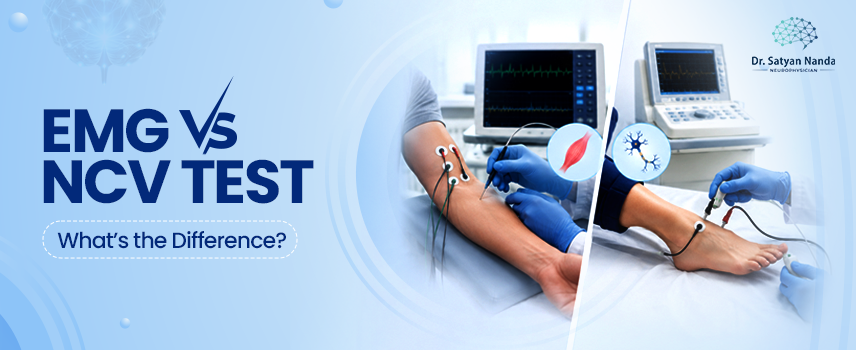
Numbness in your hands at night. A burning sensation that travels down your leg. Muscle weakness that makes you drop things unexpectedly. These are common symptoms that bring people to a neurologist, but they are also among the most challenging to diagnose through a physical examination alone.
Many different nerve and muscle disorders can produce similar symptoms. That's why neurologists rely on specialized diagnostic tests in addition to clinical examination. Two of the most valuable tests are the Electromyography (EMG) test and the Nerve Conduction Velocity (NCV) test.
Although they evaluate different parts of the nervous system, they are usually performed together to provide a comprehensive assessment of nerve and muscle function. Dr. Satyan Nanda routinely uses both tests as part of neurological diagnostic evaluations to accurately identify the cause of a patient's symptoms.
What Is an EMG Test?
An EMG (Electromyography) test records the electrical activity produced by muscles to determine whether muscle weakness or nerve dysfunction is causing a patient's symptoms.
Full Form of EMG
EMG stands for Electromyography. The test evaluates the health of muscles and determines whether the nerves supplying those muscles are functioning properly.
What Does an EMG Measure?
Muscles naturally generate tiny electrical signals whenever they contract, even during slight movement. An EMG test measures these signals using a very thin needle electrode inserted into selected muscles.
Neurologists analyze these electrical signals to determine whether muscle activity is normal.
- Healthy muscles remain electrically quiet when at rest.
- Abnormal electrical activity at rest or during movement may indicate a muscle disorder or nerve injury.
Conditions Diagnosed with EMG
An EMG test may help diagnose:
- Muscle weakness
- Peripheral neuropathy
- Myopathy
- Motor neuron disorders
- Pinched nerves
- Nerve root compression
- Neuromuscular disorders
What Is an NCV Test?
An NCV (Nerve Conduction Velocity) test measures how quickly electrical impulses travel through nerves, helping identify nerve damage or compression.
Full Form of NCV
NCV stands for Nerve Conduction Velocity. While an EMG evaluates muscles, the NCV test focuses on the nerves themselves by measuring the speed and strength of electrical signal transmission.
How Does an NCV Test Work?
The NCV test does not involve needles. Small electrodes are placed on the skin over specific nerves. A mild electrical stimulus is applied to one part of the nerve, and the response is recorded at another point along the same nerve.
This allows the neurologist to measure:
- Signal conduction speed
- Signal strength
- Location of possible nerve damage or compression
Damaged or compressed nerves conduct electrical impulses more slowly, making abnormalities clearly visible during testing.
Conditions Diagnosed with NCV
An NCV test is commonly used to diagnose:
- Peripheral neuropathy
- Carpal tunnel syndrome
- Nerve injuries after trauma
- Sciatica
- Diabetic neuropathy
- Radiculopathy
- Nerve compression disorders
EMG vs NCV: Key Differences
Although EMG and NCV tests are often performed together, they assess different components of the neuromuscular system.
Purpose of the Test
The main difference between EMG vs NCV is straightforward:
- NCV evaluates the health of nerves.
- EMG evaluates the function of muscles.
Think of the nerve as an electrical wire and the muscle as the appliance connected to it. Either one can develop problems independently.
Procedure Difference
- NCV Test: Uses surface electrodes placed on the skin. No needles are involved.
- EMG Test: Uses a thin needle electrode inserted into selected muscles.
Sensation During Testing
During an NCV test, patients typically feel brief electrical pulses that produce a mild tingling or tapping sensation.
During an EMG test, the needle insertion may cause mild discomfort. When the neurologist adjusts the needle within the muscle, some patients experience a brief aching or cramping sensation. This discomfort is temporary, and most patients tolerate both procedures well.
Diagnostic Role
When performed together, EMG and NCV tests provide a complete evaluation.
- The NCV test determines whether nerve damage or compression is present.
- The EMG test shows whether that nerve problem has affected muscle function.
Together, these tests significantly improve diagnostic accuracy.
Symptoms That May Require EMG or NCV Testing
Your neurologist may recommend these tests if you experience:
- Tingling sensations
- Persistent numbness
- Muscle weakness
- Burning pain
- Muscle cramps
- Loss of muscle control
- Unexplained muscle twitching
- Difficulty walking or maintaining balance
If these symptoms continue for several weeks, early evaluation can help diagnose nerve damage before permanent complications develop.
How to Prepare for EMG and NCV Tests
Before the Test
Preparation is simple. Patients are generally advised to:
- Avoid applying lotions, creams, or oils to the skin.
- Inform the neurologist about all medications they are taking.
- Wear loose, comfortable clothing.
- Follow any additional instructions provided before the procedure.
During the Test
You remain awake throughout the procedure and can communicate with the neurologist or technician at any time. Depending on the number of nerves and muscles being evaluated, testing typically takes between 30 and 90 minutes.
After the Test
Most patients return to their normal daily activities immediately after testing. Following an EMG, mild muscle soreness may occur for a day or two, similar to the discomfort experienced after a blood test or vaccination.
Are EMG and NCV Tests Painful?
Most patients describe both tests as mildly uncomfortable rather than painful.
- The NCV test produces brief electrical pulses that may feel surprising but are generally well tolerated.
- The EMG test may cause temporary discomfort due to needle insertion and muscle sampling.
Serious complications are extremely rare, and most patients find the experience easier than they expected.
How Long Do EMG and NCV Tests Take?
The duration depends on the number of nerves and muscles being examined.
- NCV Test: Approximately 20 to 45 minutes
- EMG Test: Approximately 20 to 45 minutes
- Combined EMG + NCV: Approximately 30 to 90 minutes
Your neurologist will explain the expected duration before the procedure begins.
Understanding EMG and NCV Results
After testing, the neurologist carefully reviews all recorded data.
Normal results indicate that:
- Nerves conduct electrical signals at normal speeds.
- Muscles respond appropriately to nerve stimulation.
Abnormal results may indicate:
- Slowed nerve conduction due to nerve compression or neuropathy.
- Abnormal muscle activity caused by nerve injury or muscle disease.
Results are always interpreted alongside the patient's symptoms, medical history, and neurological examination to arrive at an accurate diagnosis.
When Should You Consult a Neurologist?
You should consult a neurologist if you experience:
- Persistent nerve pain
- Progressive muscle weakness
- Numbness that worsens over time
- Frequent tingling sensations
- Difficulty moving your arms or legs
- Loss of coordination or balance
Patients experiencing persistent neurological symptoms may also benefit from learning about related investigations such as EEG testing, epilepsy diagnosis and treatment, and comprehensive neurological evaluation.
Conclusion
EMG and NCV tests are valuable diagnostic procedures that provide objective information about nerve and muscle function that cannot be obtained through physical examination alone.
If you have been experiencing persistent numbness, tingling, nerve pain, or muscle weakness without a clear explanation, these tests can help identify the underlying cause and guide appropriate treatment.
Consult Dr. Satyan Nanda for a comprehensive neurological assessment, accurate diagnosis, and personalized treatment recommendations.
Frequently Asked Questions (FAQs)
What is the difference between EMG and NCV?
An EMG test measures the electrical activity of muscles, while an NCV test measures the speed of electrical impulses travelling through nerves.
Why are EMG and NCV tests performed together?
Performing both tests allows neurologists to evaluate nerve and muscle function simultaneously, improving diagnostic accuracy.
Is an EMG test painful?
The EMG test may cause mild discomfort due to the needle electrode, but most patients tolerate the procedure well.
How long does an NCV test take?
Most NCV tests take approximately 20 to 45 minutes, depending on the number of nerves being examined.
Can an EMG test detect nerve damage?
Yes. EMG can identify muscle changes caused by nerve damage and helps diagnose various neuromuscular disorders.
What should I avoid before an EMG test?
Avoid applying lotions, oils, or creams to your skin before the test, and inform your doctor about all medications you are taking.