
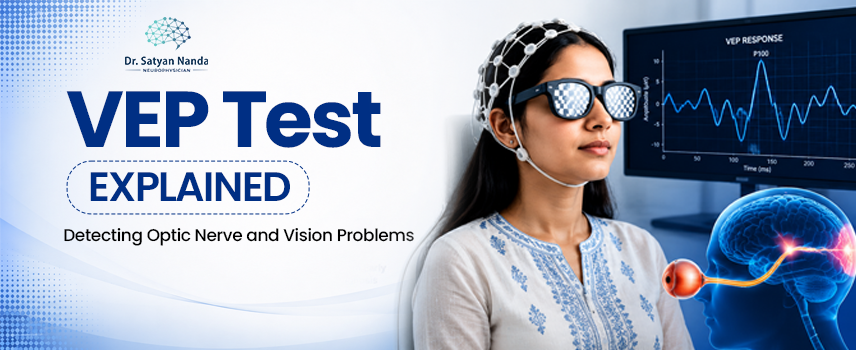
Vision problems are not confined only to the eyes. Sometimes the issue lies further along the visual pathway that involves the brain. The brain receives and processes visual signals. Conditions affecting the optic nerve or the visual pathway can cause blurred vision or dimness even when the eyes appear structurally normal during a routine eye examination.
This is where a VEP (Visual Evoked Potential) test becomes valuable. Neurologists often recommend a VEP test when vision symptoms occur alongside neurological concerns. It helps detect problems that may not be visible during standard eye tests, making it an important part of a comprehensive neurological vision assessment.
What Is a VEP Test?
VEP stands for Visual Evoked Potential. It is a diagnostic test that measures the electrical activity generated in the brain in response to visual stimulation. The test helps doctors evaluate how effectively the visual pathway carries signals from the eyes to the brain.
How Does a VEP Test Work?
During the procedure, the eyes are stimulated using visual patterns or flashing lights. Electrodes placed on the scalp record the brain's electrical responses to these visual stimuli.
The test evaluates the journey of a visual signal as it travels:
- From the retina
- Through the optic nerve
- To the visual cortex in the brain
Any delay or abnormality in signal transmission may indicate nerve damage, inflammation, or disruption along the visual pathway.
Safe and Non-Invasive Neurological Test
The VEP test is completely painless and non-invasive. There are no injections, needles, or surgical procedures involved. The electrodes simply detect the brain's natural electrical activity and do not send any electrical current into the body.
Why Is a VEP Test Done?
Evaluating Optic Nerve Function
The optic nerve carries visual information from the eye to the brain. A VEP test evaluates whether these signals are transmitted at a normal speed. Delayed signal transmission can be one of the earliest indicators of optic nerve dysfunction, often before noticeable vision loss occurs.
Diagnosing Neurological Conditions
The VEP test is commonly used to help diagnose conditions such as:
- Optic neuritis
- Multiple sclerosis (MS)
- Other disorders affecting the visual pathway
In many neurological disorders, nerve signals become slower or weaker long before symptoms become obvious. Therefore, the VEP test is usually performed as part of a complete neurological and vision evaluation rather than as a standalone investigation.
Investigating Unexplained Vision Problems
If a person experiences blurred vision, reduced vision, or sudden visual disturbances without an obvious eye-related cause, a VEP test can help determine whether the problem lies within the visual pathway and guide further diagnosis and treatment planning.
Symptoms That May Require a VEP Test
A neurologist may recommend a VEP test if you experience:
- Blurred vision
- Double vision
- Sudden vision loss
- Difficulty focusing
- Eye pain associated with vision changes
- Unexplained visual disturbances
If these symptoms persist or recur despite a normal eye examination, a VEP test may identify problems that routine eye tests cannot detect.
How Is a VEP Test Performed?
Before the Test
In some cases, a routine eye examination may be performed first to rule out simple eye-related causes. Patients should wear their prescription glasses or contact lenses if they normally use them, as clear vision is necessary for accurate testing.
During the Test
Small electrodes are placed at specific locations on the scalp. The patient is then asked to look at flashing lights or a checkerboard pattern displayed on a monitor while the equipment records the brain's electrical responses.
Duration of the Procedure
Most VEP tests take approximately 30 to 45 minutes. The duration depends on whether one or both eyes are tested and the number of recordings required. Patients simply need to remain still and focus on the visual stimulus throughout the procedure.
How to Prepare for a VEP Test
To ensure accurate results:
- Wash your hair before the appointment and avoid oils, gels, or hair styling products.
- Continue taking your prescribed medications unless instructed otherwise by your doctor.
- Bring your prescription glasses or contact lenses if you use them regularly.
Is a VEP Test Painful or Safe?
The VEP test is completely safe and non-invasive. No electrical current enters the body; the electrodes only record the brain's natural electrical signals. Because of its excellent safety profile, the test is suitable for both adults and children.
What Do VEP Test Results Show?
Normal and Abnormal Findings
Results are evaluated based on the speed and pattern of the brain's response to visual stimulation.
- Normal result: Signals are transmitted consistently and within the expected time.
- Abnormal result: Delayed or irregular responses may indicate damage or dysfunction within the visual pathway.
Detecting Optic Nerve Problems
Delayed signal transmission is one of the most important indicators neurologists evaluate when assessing optic nerve health. However, VEP findings are interpreted together with the patient's medical history, symptoms, physical examination, and other investigations for an accurate diagnosis.
VEP Test vs Eye Examination
Difference Between Eye and Neurological Testing
A routine eye examination primarily evaluates the structure and health of the eye, including the retina, lens, cornea, and other ocular structures.
A VEP test, on the other hand, assesses how visual information travels from the eyes through the optic nerve to the brain. It evaluates the functional integrity of the visual pathway rather than the eye itself.
Why Both Tests May Be Needed
These two tests complement each other because they evaluate different parts of the visual system.
- An eye examination identifies structural eye disorders.
- A VEP test identifies problems affecting the optic nerve and visual pathway.
Together, they provide a more comprehensive evaluation of vision problems.
When Should You Consult a Neurologist?
You should consult a neurologist if you experience:
- Persistent vision problems that do not improve
- Sudden vision changes without an identifiable eye-related cause
- Vision symptoms accompanied by numbness, weakness, dizziness, or balance problems
- Recurring unexplained visual disturbances
If you are searching for the best neurologist in Delhi NCR, a specialist can determine whether a VEP test or other neurological investigations such as an EEG or BAER test are appropriate for your symptoms.
Conclusion
The Visual Evoked Potential (VEP) test is an important diagnostic tool for detecting disorders affecting the optic nerve and visual pathways that may not be identified during a routine eye examination. By evaluating how visual signals travel from the eyes to the brain, the test helps detect neurological disorders at an early stage, allowing timely diagnosis and effective treatment.
If you are experiencing unexplained vision problems despite a normal eye examination, consult Dr. Satyan Nanda to determine whether a VEP test is appropriate for your condition.
Frequently Asked Questions (FAQs)
What is a VEP test used for?
A VEP test evaluates how effectively the optic nerve and visual pathway transmit signals from the eyes to the brain. It helps diagnose various neurological and visual disorders.
Is a VEP test painful?
No. A VEP test is completely painless. Electrodes placed on the scalp only record the brain's electrical activity and do not deliver any electrical current.
How long does a VEP test take?
Most VEP tests take approximately 30 to 45 minutes, depending on the testing protocol.
Can a VEP test detect optic nerve damage?
Yes. A VEP test can detect delayed or abnormal signal transmission along the optic nerve, which may indicate early nerve damage or disease.
How should I prepare for a VEP test?
Wash your hair before the appointment, avoid using hair oils or styling products, continue taking your regular medications unless instructed otherwise, and bring your prescription glasses or contact lenses if you normally wear them.