
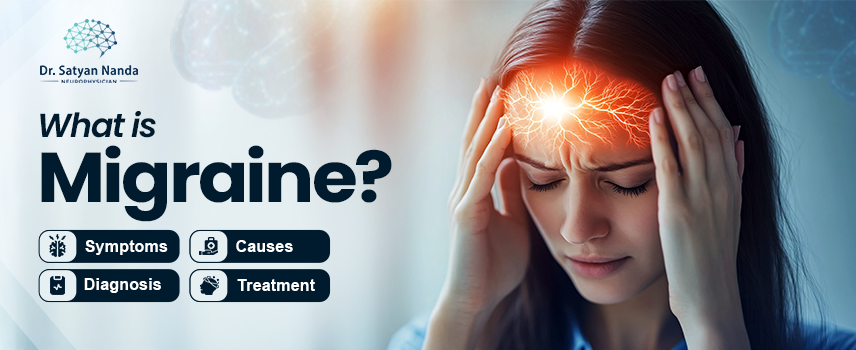
Migraine is one of the most under-reported neurological conditions, mainly because people confuse it with an unusually bad headache and simply wait for it to pass. Many patients go years without a proper evaluation because of this misunderstanding.
Dr. Satyan Nanda sees patients with chronic migraine in the setting of general neurology practice. In this article, you will learn in plain and simple language what migraine is, why it occurs, and how a migraine specialist diagnoses and treats it.
What is a Migraine and How Does It Feel?
Migraine is a real neurological disease. It is not just a bad headache. The pain happens because of changes in brain activity and blood vessels. It is not caused by any damage to the skull or the eyes.
It typically causes:
- Throbbing or pulsing pain, usually on one side of the head
- Nausea or vomiting
- Sensitivity to light and sound
- Episodes lasting from a few hours to several days
The attacks occur often enough to disrupt work, sleep, and daily activities for several days at a time.
How is Migraine Different from a Regular Headache?
Tension-type headache typically feels like a mild to moderate band-like pressure or tightness around the head. It is not usually enough to stop most people from going about their day.
Migraine rarely does that. It stops a person mid-task and brings extra symptoms, nausea or sensitivity to light among them, that a normal headache does not bring. It’s important to know which one you have, because medicine for a tension headache isn’t likely to help much for migraine.
The Different Phases of a Migraine Attack
The pain does not always start immediately in a migraine. Many patients go through multiple separate phases before and while having an attack.
Prodrome
Slight modifications one or two days in advance, like mood swings, food cravings, or a stiff neck.
Aura
Sensory changes lasting from a few minutes to an hour, like flashing lights or tingling, are common, but not all patients have this stage.
Headache Phase
The main attack itself, bringing throbbing pain, nausea, and sensitivity to light or sound.
Postdrome
A recovery time when the pain subsides, is usually described as feeling tired or dazed for the rest of the day.
Common Symptoms of Migraine You Should Know
Every patient feels migraine a little differently. But some symptoms are common:
- Throbbing pain, usually on one side of the head
- Nausea, sometimes with vomiting
- Sensitivity to light, sound, or certain smells
- Visual disturbances before the headache, known as aura, in some cases
- Fatigue or difficulty concentrating even after the pain subsides
- Neck stiffness or dizziness during an attack
Early detection of these migraine symptoms can let treatment start earlier and be more effective.
What Causes Migraine? Common Triggers Explained
The exact mechanism of migraine is beyond the knowledge of doctors, but a few triggering factors can occasionally be found from the patient's history.
Genetics
Migraine tends to run in families, suggesting a genetic connection.
Hormonal Changes
There are real hormonal changes involved as well, which is part of why migraine is more common in women than men.
Common Everyday Triggers
- Stress
- Irregular sleep patterns
- Skipped meals or dehydration
- Certain foods and alcohol
- Sudden weather changes
- Strong smells or bright lights
A headache specialist will typically spend actual time with every patient to identify their personal migraine causes, as what triggers one person's attack may not affect another.
Different Types of Migraine Explained
Migraine with Aura
This form has warning signs in advance of headache onset, particularly visual disturbances that resemble flashing lights or zigzag patterns.
Migraine without Aura
This is the usual form in which the headache just comes on without any warning.
Chronic Migraine
When migraine occurs on 15 or more days per month for 3 months or longer, physicians label it as such. This form disrupts day-to-day life to a greater extent and usually calls for treatment instead of just handling every attack on its own.
Warning Signs That Need Immediate Medical Attention
Certain symptoms warrant immediate evaluation rather than waiting to observe. See a neurologist for migraine immediately if you have:
- A sudden headache that feels unusually severe
- Confusion or a sudden change in vision
- Weakness on one side of the body
- Difficulty speaking clearly
- A headache that follows a head injury, or one that keeps getting worse over time
These signs can occasionally point to something beyond ordinary migraine.
How Do Doctors Diagnose Migraine?
Migraine diagnosis is mostly based on talking to the patient. There is no single test for it. A neurologist will ask how often the attacks happen, how long they last, what brings them on, if migraine runs in the family, and what other symptoms come with the pain.
A physical and neurological exam is also done, mainly to check for other problems. Sometimes an MRI or CT scan is ordered too. This is not to confirm migraine, since migraine does not show up on a scan. It is to rule out other causes. This is why an accurate migraine diagnosis depends so much on a doctor's experience and judgment.
How is Migraine Treated? Available Treatment Options
The two treatments are pain relief during an attack and prevention of attacks; most migraine treatments strive for these two desired effects simultaneously.
For an Active Attack
- Pain relievers
- Anti-nausea medication
- Triptans, medicines designed specifically for migraine pain
Preventive medication is often started to reduce the frequency and severity of attacks as part of overall migraine treatment. A migraine specialist will usually tailor this plan to each individual’s symptoms and triggers as the effectiveness of treatment can vary significantly from person to person. Sleep hygiene, good hydration, and trigger avoidance are generally adjuncts to rather than substitutes for medications.
How to Prevent Migraine Attacks
Migraine prevention has less to do with any single remedy and more to do with keeping certain habits consistent day after day. A few things genuinely make a difference:
- Keeping a headache diary
- Drinking enough water throughout the day
- Following a regular sleep schedule
- Eating meals at consistent times
- Managing stress through light exercise or relaxation techniques
For those who experience chronic or severe attacks, daily preventive medication or, in some cases, Botox injections may be advised, as part of an overall approach to migraine prevention. Developing this strategy in consultation with a specialist tends to be more effective than self-directed remedies.
How Long Does a Migraine Attack Usually Last?
A migraine attack can last anywhere from roughly four hours to 72 hours in more severe cases, and sometimes longer for patients with frequent, long-standing patterns. Treatment early in the attack usually shortens it.
When Should You Consult a Neurologist?
See a neurologist for migraine if your headaches are increasing in frequency or severity. Your routine medication is no longer effective. Migraine is interfering with your ability to work, sleep, or function normally. Your pattern of headaches changes suddenly.
Conclusion
Migraine is a true neurological disorder, not simply a bad headache that produces pain more than other headaches. It requires a proper medical assessment, not years of dealing with it in silence alone.
How manageable a condition goes on to become can be shaped by paying attention to migraine symptoms as they arise, learning your own personal migraine triggers, and working towards an accurate diagnosis together.
If migraines have been a frequent companion in your life, seeing Dr. Satyan Nanda, an experienced migraine specialist, could be the first step to stop the guessing games and start a plan of action based on understanding what is really causing your symptoms.
Frequently Asked Questions (FAQs)
What is the main cause of migraine?
Migraine is a complex disorder due to a combination of genetic, hormonal, and environmental factors. Stress, lack of sleep, and some foods are among the most common triggers in everyday life.
How is migraine different from a normal headache?
Migraine typically involves one-sided throbbing pain, nausea, and sensitivity to light or sound, symptoms that are usually absent in a normal headache.
Can migraine be cured completely?
There is no permanent cure for migraine, but an appropriate combination of treatment and prevention can have a significant impact on the frequency and severity of the attacks.
When should I see a migraine specialist?
When the attacks begin to be more frequent, more intense, or stop being responsive to the usual medication, it is worth making an appointment for a suitable evaluation with an expert.
What triggers a migraine attack?
Common triggers include stress, poor sleep, skipped meals, dehydration, certain foods, alcohol, bright lights, and sudden weather changes.
Can chronic migraine be treated effectively?
Yes, it can be managed well through a combination of preventive medication, lifestyle changes, and continued guidance from a headache specialist.