
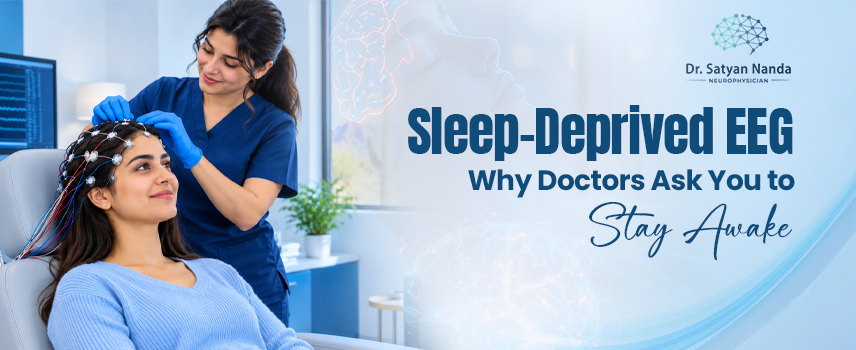
Why would a neurologist ask you to sleep less before a brain test? It sounds strange. But there are reasons behind it.
An EEG, or Electroencephalogram, is a simple test that records the electrical activity of your brain. Doctors use it to understand blackouts, fainting spells, suspected seizures and other unexplained episodes. Sometimes a routine EEG does not give a clear answer, and that is when a Sleep-Deprived EEG is considered. If your doctor has asked you or your loved one to sleep less before this test, you are probably here to understand the reason and prepare the right way.
This blog is about it only. We’ll go through it step by step - what it is, why it's done, how it's done, its preparation, what all patients should take care of, what happens after this test, and whether it is safe or not.
What Is A Sleep-Deprived EEG & How Does It Work?
Quick answer: A sleep-deprived EEG is a brain test done after you sleep less than usual. Less sleep makes unusual electrical patterns easier to catch especially during drowsiness. Doctors use it when a routine EEG is unclear or epilepsy is suspected. It is generally painless. And staying awake does not guarantee a seizure.
EEG stands for electroencephalogram. Small sensors called electrodes are placed on your scalp. They record the electrical activity of your brain. That’s all they do.
Nothing goes into your brain. There are no shocks and no electric current sent inside you. The machine only listens.
During the test, your brain activity may be recorded when you are awake, when you feel drowsy, and sometimes when you fall asleep naturally.
Doctors look for something called epileptiform discharges. These are unusual bursts of electrical activity linked with epilepsy. The tough part is that they may not show up in a short, routine EEG. Sleep deprivation gives the test a better chance of catching them.
Why Do Doctors Ask You To Stay Awake Before An EEG?
Quick answer: Reduced sleep can make the brain more likely to show abnormal electrical activity if a person is prone to seizures. Drowsiness and light sleep also bring out patterns that stay hidden when you are fully awake.
Here are the three main reasons:
- Less sleep lowers the brain’s “seizure threshold”. In simple words, a tired brain can be more easily pushed into abnormal activity, if you are prone to seizures.
- Drowsiness reveals hidden patterns. Some abnormal patterns appear mostly in light sleep, called N1 and N2 stages. These are the early, easy-to-wake-from stages of sleep.
- It improves the chance of spotting a problem. A sleep-deprived recording may show changes that a routine EEG missed.
Doctors often suggest it in these situations:
- A routine EEG was normal or unclear, but symptoms continue
- Unexplained blackouts or fainting episodes
- Suspected seizures
- Unusual episodes during sleep
One thing to be clear about. Sleep deprivation is a way to investigate. It is not a treatment. And it does not always trigger a seizure or promise a clear answer. It simply improves the opportunity to detect certain changes.
EEG Preparation Night Before: A Step-by-Step Checklist
Good preparation makes the recording cleaner and more useful. Sleep restriction also depends on your age, your medical history and what your neurologist says. So treat the table below as examples only.
How Much Sleep Should You Get Before a Sleep-Deprived EEG?
Quick answer: Adults are often asked to sleep about 4 to 5 hours the night before, but this changes with age and medical history. Children and infants follow a specialist-set schedule. Always follow your EEG centre’s instructions.
| Patient Group | General Preparation Guidance |
|---|---|
| Adults | Some protocols allow about 4 to 5 hours of sleep |
| Older Children | Follow the age-specific sleep schedule given by the EEG centre |
| Infants and Young Children | Use a specialist-directed schedule. Never apply adult sleep restriction |
Your centre’s schedule always comes first.
Night-Before and Test-Day Checklist
- Wash Your Hair. Keep it clean and dry. No oil, serum, gel, conditioner or styling products. They can block electrode contact.
- Skip Caffeine. Avoid coffee, tea and energy drinks if the centre has told you to avoid them.
- Take Your Regular Medicines. Continue anti-seizure tablets and other prescribed medicines unless your neurologist clearly says otherwise.
- Arrange A Companion. Especially if you have had seizures, fainting or heavy sleepiness.
- Carry Your Records. Old EEG reports, prescriptions, scans and notes on recent episodes.
- Ask About Food. Check with the centre whether you can eat normally before the test.
Important Safety Note: Never stop anti-epileptic medicines on your own. And never stay awake longer than the schedule you were given.
What Happens During a Sleep-Deprived EEG Test?
Here is how it usually goes:
- The technician asks about your sleep, medicines and medical history.
- Small electrodes are attached to your scalp with a special paste or gel.
- Your brain activity is recorded while you are awake and if possible, while you get drowsy or fall asleep.
- You may be asked to open and close your eyes or do a few simple activities.
- Once the recording is done, the data goes to the neurologist for interpretation.
The test is non-invasive and painless. You may feel a little discomfort from the paste or the scalp cleaning, that’s all.
How long will it take? That depends on the centre’s protocol, so it is best to confirm when you book.
Does A Sleep-Deprived EEG Trigger A Seizure? Is It Safe?
Quick answer: Not always. Less sleep can raise seizure risk in people with epilepsy but most patients do not have a seizure during the test. The EEG is done to observe brain activity, not to cause a seizure.
Sleep deprivation can make seizures more likely in people with epilepsy. That is why the instructions matter so much. If you have had seizures before, stick to the exact sleep plan your neurologist gave you.
Children, elderly patients and people with frequent or poorly controlled seizures may need extra care. The test is planned around your health condition.
The test is generally considered safe, but no medical test is completely risk-free. If you are worried, ask your neurologist before the day. Don’t hesitate in this matter, it's completely normal to feel nervous.
What Happens After The Sleep-Deprived EEG?
A neurologist reviews the recording. The results may show normal activity or epileptiform abnormalities.
Now, a very important point:
- An abnormal EEG alone does not always confirm epilepsy.
- A normal EEG does not completely rule it out.
The doctor reads the result along with your symptoms, medical history and other tests. It is one piece of the puzzle. So, don’t try to make assumptions here.
If episodes still remain unexplained, or the doctor needs to see the events in more detail, Video EEG monitoring may be suggested. This records brain activity and video together, so symptoms can be matched with what the brain was doing.
Where Can You Get An EEG Test In Rajouri Garden, West Delhi?
An EEG report is only as useful as the person reading it. Two patients can have the same pattern on the recording and very different stories behind it. That is why it matters who looks at your results.
Dr. Satyan Nanda is a DM Neurology from SCTIMST. He is Senior Consultant and Head of Neurology, and has worked at well-known hospitals in Delhi NCR. His research has also been presented at the World Congress of Neurology. He sees patients who are looking for EEG for epilepsy, blackouts, fainting spells and other brain and nerve problems every day.
Our Rajouri Garden clinic is easy to reach for families from Punjabi Bagh, Tagore Garden, Janakpuri and nearby parts of West Delhi.
Why Patients Choose Dr. Satyan Nanda
- Your EEG is read along with your symptoms and history.
- He explains the findings in simple words, so you and your family understand what is going on.
- If a Sleep-Deprived EEG is not enough, he can guide you towards Video EEG monitoring.
- You get clear preparation instructions before the test, so you do not do anything wrong.
Note: Please bring your old EEG reports, scans and prescriptions when you come.
If you have been asked to get a Sleep-Deprived EEG, or you are unsure which EEG test is right for your symptoms, Dr. Satyan Nanda can look at your reports and guide you on the next step.
Frequently Asked Questions About Sleep-Deprived EEG
Can I drive home after a sleep-deprived EEG?
It is better not to. Less sleep can make you drowsy and slow your reactions. Ask someone to drive you home, especially if you have had seizures or feel very sleepy after the test.
Does staying awake guarantee a seizure during the test?
No. Less sleep may make it easier to detect abnormal electrical activity, but many patients finish the test without any seizure.
How long does a sleep-deprived EEG take compared to a routine EEG?
It can take longer, because the technician needs to record both wakefulness and drowsiness or sleep. The exact time depends on the centre’s protocol, so confirm it when you book.
Can I take my epilepsy medicines before a sleep-deprived EEG?
Yes, in most cases. Continue your prescribed medicines unless your neurologist tells you something different. Never skip or change a dose on your own before the test.
Is a Sleep-Deprived EEG painful?
No, it is painless. The electrodes only record brain activity and do not send any current into your head. You may feel mild discomfort from the paste or scalp cleaning. Lying still for long can feel a little tiring too.
What if I fall asleep during the EEG?
That is fine, and often helpful. Falling asleep lets the technician record light sleep stages, where some unusual patterns show up more easily. You do not need to fight sleep or try to stay alert during the recording.
Can a normal EEG rule out epilepsy?
No. A normal EEG does not completely rule out epilepsy, because abnormal patterns can come and go. Your neurologist also looks at your symptoms and history. A repeat EEG, a Sleep-Deprived EEG or Video EEG monitoring may be suggested.
Can children have a Sleep-Deprived EEG?
Yes, in some cases, but never with adult sleep rules. Children need an age-specific sleep schedule from the EEG centre or neurologist. Please do not keep your child awake longer than advised.