
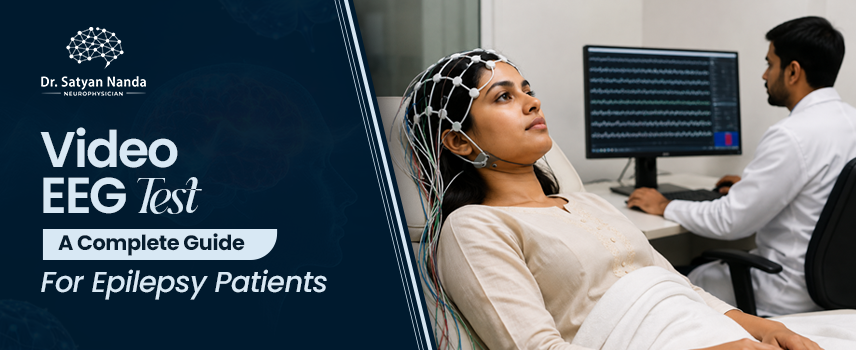
A Video EEG Test is a specialized investigation used to monitor brain activity and body movements at the same time. It is commonly recommended when a neurologist needs more information about seizures or seizure-like episodes.
If you or a family member has been advised to undergo Video EEG monitoring, it is natural to have questions about how the test is performed, how long it takes, whether it is painful, and what happens during the monitoring period. This guide explains the Video EEG procedure, preparation, safety, and what to expect before, during, and after the test.
If you want to understand when Video EEG is recommended for epilepsy diagnosis, read our guide on When Is a Video EEG Test Needed for Epilepsy Diagnosis?
What Is a Video EEG Test?
A Video EEG Test records the brain's electrical activity and the patient's movements or behaviour at the same time. Small electrodes placed on the scalp record brain waves, while a video camera records what happens during the monitoring period.
The recordings are synchronized, allowing the neurologist to compare changes in brain activity with physical symptoms such as staring, jerking movements, unusual behaviour, or loss of awareness.
Unlike a routine EEG, which usually lasts for a short period, Video EEG monitoring can continue for several hours or even several days. This gives doctors a better opportunity to capture an actual seizure or other episode.
Good to know: Video EEG may also be called EEG telemetry or long-term EEG monitoring.
EEG vs Video EEG: What’s the Real Difference?
A routine EEG usually records brain activity for about 20 to 30 minutes. It provides useful information about brain waves but may not capture a seizure because seizures can happen unpredictably.
A Video EEG Test combines EEG recording with continuous video monitoring. It can continue for several hours or days, depending on the reason for testing. The synchronized video helps the neurologist see what the patient was doing at the exact time of any EEG changes.
In simple terms, a routine EEG records brain activity, while Video EEG records brain activity and what is happening to the patient at the same time.
How Is Video EEG Monitoring Done?
Video EEG monitoring is performed in a specialized monitoring room under the supervision of trained medical staff. The exact duration depends on the patient's condition and the reason for the test.
Preparation Before the Test
You may be asked to wash your hair before the test and avoid hair oil, gel, or other styling products. Clean hair helps the electrodes stay securely attached to the scalp.
For longer monitoring sessions, comfortable clothes are recommended. Front-opening shirts can be easier to wear because the EEG wires remain connected during monitoring.
Follow your neurologist's instructions about medicines, sleep, food, and other preparation. Do not stop or change any medication on your own.
Electrode Placement
A trained technician places small electrodes at specific points on your scalp. A special paste or adhesive is used to keep them in place.
The electrodes are connected to the EEG recording system. The procedure is non-invasive and does not involve needles or electricity being sent into the brain.
Video and EEG Recording
Once the electrodes are attached, the EEG system continuously records brain activity while a camera records your movements and behaviour.
The recordings are synchronized, so the neurologist can later compare the EEG changes with what was happening physically at the same time.
During the Monitoring Period
You may be able to sleep, eat, read, watch television, or use electronic devices, depending on the monitoring unit's rules.
You may be asked to press a button or inform the staff if you experience any unusual symptoms. Family members or caregivers may also be asked to describe what they observed during an episode.
In some cases, the neurologist may adjust anti-seizure medication or sleep patterns under close medical supervision to increase the chance of recording an event. This is done only when medically appropriate and should never be attempted at home.
Completion of the Test
Once enough information has been recorded, the technician removes the electrodes and cleans the scalp.
The neurologist then reviews the EEG recordings together with the video footage and uses the findings to guide further evaluation or treatment.
What Can You Do During Video EEG Monitoring?
Many patients worry that they will have to remain completely still throughout the test. Usually, you can perform normal activities within the monitoring area, although the exact rules depend on the hospital.
During monitoring, you may generally be able to:
- Sleep and rest
- Eat and drink as permitted
- Read books or magazines
- Watch television
- Use a phone or other electronic device if allowed
- Talk with family members or the medical team
You should follow the instructions provided by the monitoring staff. Avoid activities that could become unsafe if a seizure occurs unless the medical team specifically permits them.
What Should You Bring for a Video EEG Test?
If your Video EEG monitoring requires a longer hospital stay, bringing a few personal items can make the experience more comfortable.
Consider bringing:
- Comfortable, front-opening clothes
- Personal toiletries
- Prescription medicines in their original packaging
- Books, magazines, or other permitted entertainment
- A phone and charger
- Any previous EEG, MRI, CT scan, or medical reports requested by your neurologist
Before your test, ask the hospital whether there are any specific items you should bring or avoid.
Is Video EEG Monitoring Safe?
Yes. Video EEG monitoring is a non-invasive test and does not use radiation or involve surgery. The electrodes only record the brain's electrical activity.
When monitoring is performed in a hospital, trained medical staff can observe the patient and provide assistance if a seizure or other episode occurs.
During longer monitoring sessions, safety measures may include:
- Continuous observation by trained staff
- Safety precautions around the bed
- Quick assistance if a seizure occurs
- Close supervision if medication adjustments are required
Some patients may experience mild scalp discomfort or irritation after the electrodes are removed. This usually improves within a short time.
What Happens After The Video EEG Test?
After monitoring is completed, the technician removes the electrodes and cleans the scalp. Some adhesive or paste may remain temporarily and can usually be removed with normal hair washing.
The neurologist then reviews the EEG recordings and synchronized video footage. The interpretation may take some time, particularly when several days of recordings have been collected.
Your doctor will discuss the findings with you and explain whether any further tests, medication changes, or other treatment steps are needed.
Video EEG Monitoring with Dr. Satyan Nanda
Dr. Satyan Nanda provides neurological evaluation and Video EEG monitoring for patients at Yatharth Hospital, Noida, and his clinic in Rajouri Garden.
As a Senior Consultant and Head of Neurology at Yatharth Hospital, he has clinical experience in the evaluation and management of epilepsy and other neurological disorders, with experience in EEG, Video EEG, NCV, and EMG.
If your neurologist has recommended Video EEG monitoring, a proper clinical evaluation and expert interpretation of the recording can help guide the next step in your care.
FAQs (Frequently Asked Questions)
How long does a Video EEG Test take?
That depends on why it's being done. Some patient tests wrap up in a few hours. Others, especially when a patient is admitted, run for several days. Your doctor decides the duration based on how often seizures usually occur and what exactly they're trying to catch on record.
Is there any pain involved in the Video EEG Test?
None at all. The electrodes just sit on the scalp with a bit of paste holding them in place. There is no pain involved at any stage of the test.
Can I sleep while the test is going on?
Yes, and doctors actually want you to sleep. A lot of seizures happen only during sleep so staying awake the whole time would not be right. However, the recording runs continuously so nothing gets left out whether you're awake or asleep.
Will they stop my medicines during this?
Sometimes the dose is lowered a little, just to raise the odds of catching a seizure while you're being monitored. This is only done inside the hospital setting, under supervision and never on your own at home.
Where can I get a Video EEG test done in Delhi NCR?
Yatharth Hospital in Sector 110, Noida, and the Rajouri Garden clinic offer Video EEG monitoring under the care of Dr. Satyan Nanda. Patients from Greater Noida, South Delhi, GK1, GK2, and Rajouri Garden can consult him for Video EEG evaluation and monitoring.